← All templates
Particle Logo & Product Reveal
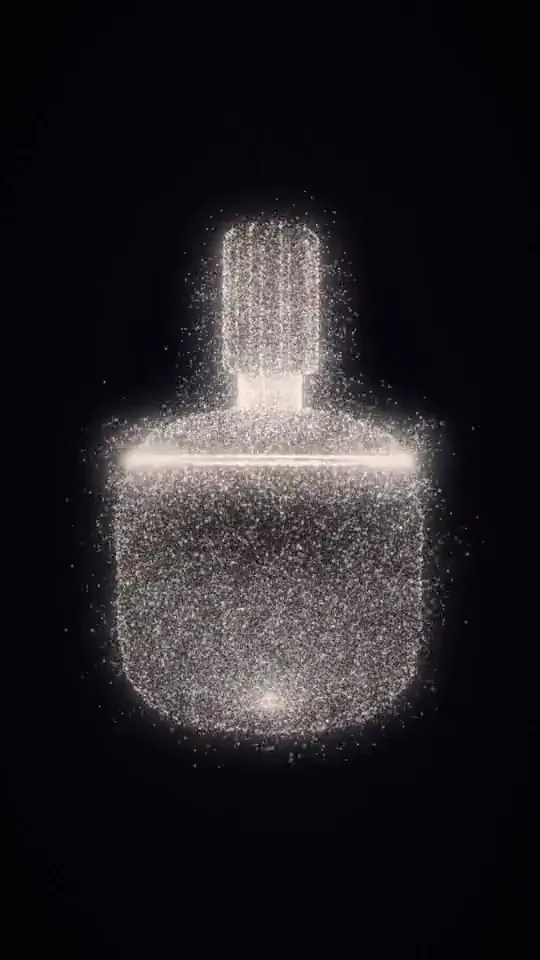
A product launch, a logo reveal, a brand opener
Make the same video as the "Particle Logo & Product Reveal" template on ultramotion.ai: https://ultramotion.ai/templates/product-reveal/

If you can install skills, run npx skills add sunsiyuan/ultramotion first and use examples/aurora-launch-en.html in skills/light-particles as the starting point: copy it and keep the look, the pacing, the camera, the type and the music exactly as they are; only replace what is in 【】 below with mine. If the words are longer or shorter, change the size and the line breaks, not the structure. If you can't install skills, make the same video as the one on that page from scratch.

My content:
- Product or brand name: 【AURORA】
- Launch date (optional): 【NOVEMBER 12】
- What the light gathers into: 【a product photo, a 3D model, your logo as SVG, or a sentence describing its shape】

Deliver: Vertical 1080×1920, 30 fps, an mp4 with music, in the current directory.
Made at 9:16. For another size (9:16, 16:9, 4:5, 1:1), say so in the prompt.
More in this style
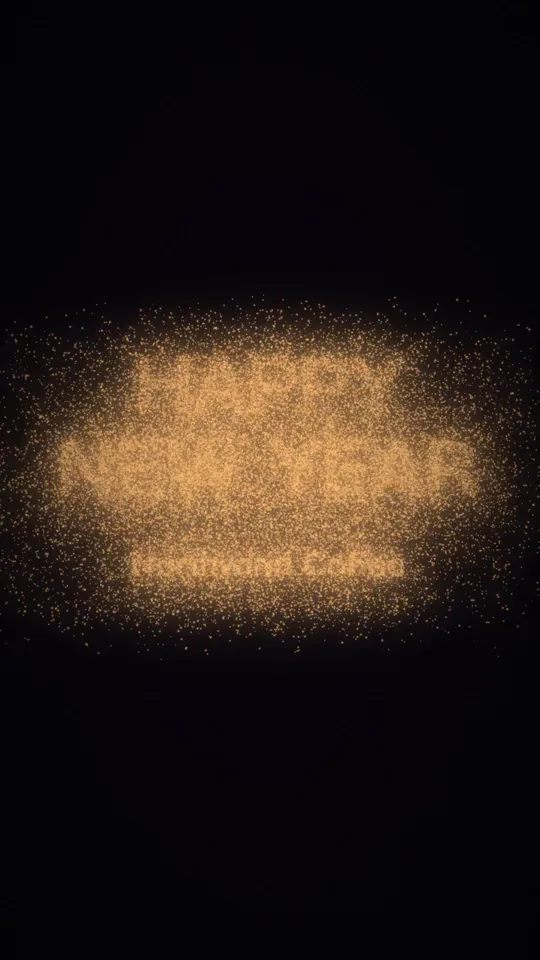 Particle New Year Greeting
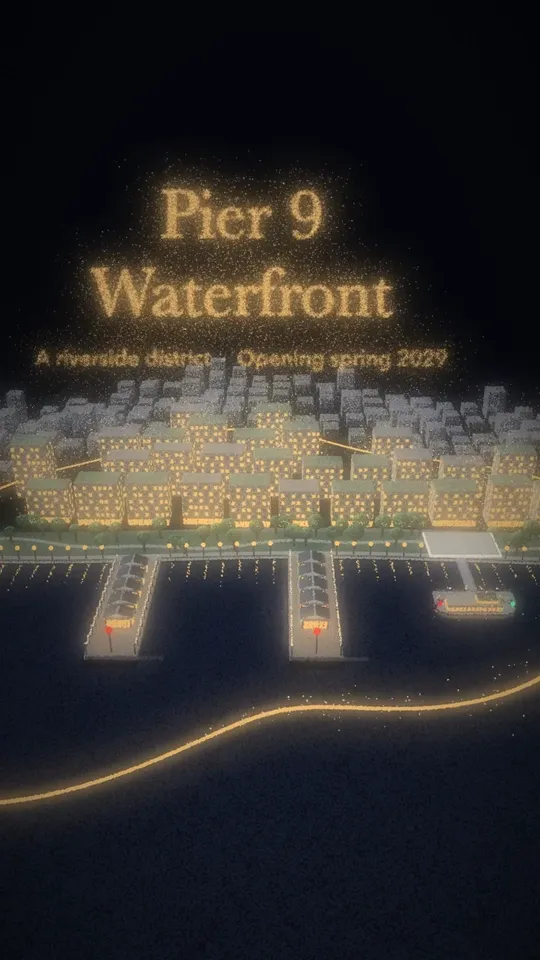 Particle City Model Reveal
The full prompt behind the first sampleEverything the first sample was made from, written out. Use it to make it from scratch, or to see how it is put together.
Make a video in the Light Particles style from ultramotion.ai: https://ultramotion.ai/styles/light-particles/
The style is an open-source Agent Skill. If you can install skills, run npx skills add sunsiyuan/ultramotion first and build it with the light-particles template (particles.js draws over a million particles with WebGL2, render.py renders, sound.py makes the sound). If you can't, write it from scratch following the description below.

[Deliverable]
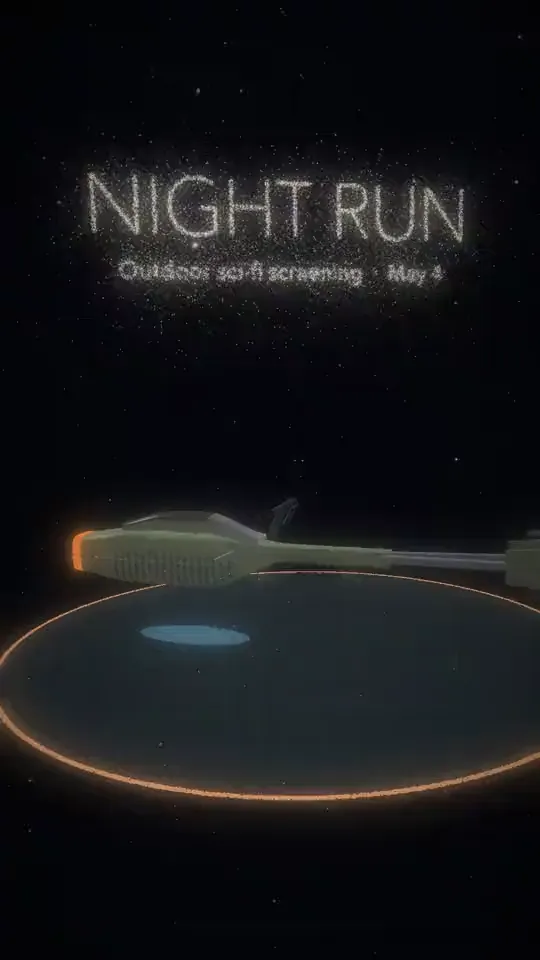
- NIGHT RUN: an announcement for an outdoor sci-fi screening on May 4. A hover bike builds itself out of particles in deep space, fires its engine and lifts off, then the event name appears among the stars.
- Vertical 1080×1920, 30 fps, 24 seconds, an mp4 with music and sound effects, saved in the current directory.
- The whole video is drawn by one web page with WebGL2: 1.4 million particles, every frame a pure function of time t — each particle's position at t is computed, not simulated frame by frame, so any frame can be rendered on its own. Render with a headless browser with the GPU on, calling seek(t) and screenshotting each frame; encode with ffmpeg, then add the sound.
- Make a preview first (frames at, say, 2, 6, 10, 14, 18 and 22 s) and look at it before rendering.

[The look]
- Deep-space background #04050a. Four colours: dust #20242c, pale #e8ecf2, warm white #fff1e0, exhaust orange #ff8a3a.
- The bike is made of solid particles: each particle is an opaque dot, nearer dots hide farther ones, with normals and shading, like a point-cloud scan of a real object — never a glass box you can see through.
- Real proportions: pick one real measurement (the seat height, the length of the bike, about 1100 units) and size every part from it — a long body, long forward rods, a seat, handlebars, an engine with a glowing exhaust at the back, hovering over a landing pad.
- A share of the particles always stays behind as stars, so the flight never stops.
- Titles stay crisp: thin Avenir Next (or Helvetica Neue) made of small, dense points of light, never a fuzzy blob. Leave the title on screen for at least 3 s.
- Brightness: glowing particles add up; with this many, keep their gain low (about .3–.45). Large white areas mean it is too bright. Use bloom on the exhaust and the stars.

[How it moves — this is the style]
- Gather: particles start as a loose field of stars and fly into the next shape on paths that bow outward, arriving staggered.
- Build in order: each particle carries an arrival order, so the bike builds front to back like a scan.
- Transform: the same model in two states — parked with the engine off, then lifted with the engine lit — and the particles move between the two.
- Take over: to put a title over the scene, most particles stay where they are and only a small share (about 1.5%) flies off to form the words.
- The camera never fully stops: it glides on one smooth curve through its key positions, with a slight handheld breathing. Particles very close to the lens thin out instead of popping.

[Shots]
- 0–4.5 s · Fly in: the camera starts far outside a field of stars with the horizon tilted, and pushes in through them as the particles start to gather.
- 1–9 s · Build: the hover bike builds front to back over its pad (8 s) while the camera drops low alongside it and circles slowly.
- 9.5–12.5 s · Close pass: the camera sweeps past the tips of the long forward rods at a short distance.
- 11 s · Lift-off: the engine fires — a low boom and a whoosh — the exhaust glows warm orange, and the bike rises from about 40 to 110 units above the pad in 2 s.
- 12.5–17 s · Round the back: the camera sweeps round behind the bike to the glowing exhaust.
- 17–24 s · Title: a small share of particles swirls up and forms "NIGHT RUN" in the stars, with a smaller line "Outdoor sci-fi screening · May 4" in warm white. The camera settles at a steady rear three-quarter view under the title.

[Sound]
- A whoosh as each shape flies in and a soft shimmer as it lands; at 11 s a low boom with a 2.5 s whoosh for the engine.
- Synthesize the music in code (numpy / scipy): a slow swell in D minor at 76 BPM — pads and bass on Dm, B♭, C, A over eight bars, getting slightly louder each bar; from bar three a quiet organ line rises over it; a bell at 17.4 s as the title appears.

[Check before you hand it over]
- Look at the preview, and at a full-size crop of anything that matters.
- The bike looks like a glass box, or its far side shows through: use solid particles.
- Dark or bright specks on surfaces up close: too few particles — raise the count and spread particles by surface area.
- A grey wall at the start: the opening stars are solid too — make them loose, twinkling points spread wider.
- Big blurry blobs when the camera is close: pull the camera back.
- A title that is a fuzzy blob: lower the share of particles that form it, or the dot size.
- Everything white and blown out: lower the brightness.
- A bike that looks like a toy or a lump: check its proportions against a real one and add the parts that make it recognisable (seat, bars, lights, exhaust).
- A black frame: the browser has no WebGL2 — render with Chromium and the GPU on.